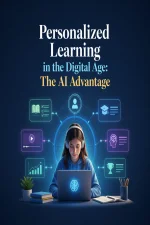
Personalized Learning in the Digital Age
Product Details
| Content Format | PDF Ebook |
|---|---|
| Generation & Review | AI-Assisted Research & Expert Curation |

Want Unlimited Downloads?
Get instant access to this product plus 3,200+ digital products with Master Resale Rights at MasterResaleRightsClub.com.
Join MasterResaleRightsClubIn today's rapidly evolving educational landscape, personalized learning has emerged as a revolutionary approach to teaching. This ebook, "Personalized Learning in the Digital Age," explores how technology and artificial intelligence (AI) are reshaping educational experiences to cater to individual learning needs. Whether you are an educator, a student, or a parent, this resource provides valuable insights into how personalized learning can enhance engagement and motivation, paving the way for academic success.
About This Ebook
This ebook delves into the transformative concept of personalized learning, which tailors educational experiences to the unique preferences, interests, and paces of individual learners. Unlike traditional educational models that adopt a one-size-fits-all approach, personalized learning recognizes the diverse needs of students. By integrating AI technologies, this resource highlights how personalized learning can be effectively implemented in various educational settings, ensuring that each learner receives the support they need to thrive. Readers will discover practical strategies and tools that leverage AI to create adaptive learning pathways, fostering an environment of continuous improvement and engagement.
What You'll Learn
- The fundamentals of personalized learning and its significance in modern education.
- How AI enhances personalized learning experiences through data-driven insights.
- Examples of effective AI-powered learning tools and platforms.
- The benefits of adaptive learning pathways tailored to individual student needs.
- Challenges and considerations in implementing AI in educational settings.
- Strategies for balancing technology use with essential human elements of teaching.
Key Topics Covered
The Concept of Personalized Learning
Personalized learning is a pedagogical approach that customizes educational experiences to align with each student's unique learning style and pace. This section explores the principles behind personalized learning, discussing how it contrasts with traditional education models. By focusing on individual strengths and preferences, personalized learning aims to foster greater engagement and motivation among students, ultimately leading to improved academic outcomes.
The Role of AI in Education
Artificial intelligence plays a pivotal role in enhancing personalized learning by analyzing data to identify individual learning patterns. This section covers how AI technologies can provide educators with valuable insights into student performance, enabling targeted interventions. Readers will learn about the advantages of implementing AI, such as adaptive learning pathways that adjust in real-time to student needs, ensuring that learners are appropriately challenged and supported.
Innovative AI-Powered Learning Tools
This section highlights several cutting-edge platforms that exemplify the integration of AI in personalized learning. Tools like Knewton, DreamBox, and Carnegie Learning are discussed, showcasing their capabilities in delivering tailored educational content. These platforms not only enhance the learner's experience but also equip educators with actionable data to track progress and adapt their teaching strategies effectively.
Challenges and Considerations in Implementation
While the benefits of AI in personalized learning are significant, this section addresses the potential challenges that educators may face. Issues such as data privacy, equitable access to technology, and the necessity for teacher training in AI applications are examined. Readers will gain insights into how to navigate these challenges while maintaining a focus on the essential human elements of teaching, such as empathy and connection with students.
Key Benefits
- Enhanced engagement through tailored learning experiences that meet individual needs.
- Improved academic performance by providing appropriate challenges and support.
- Access to data-driven insights that inform teaching strategies and interventions.
- Scalable personalized learning solutions that can accommodate diverse educational environments.
- Continuous improvement of learning pathways based on real-time feedback and performance data.
Who This Ebook Is For
This ebook is designed for educators seeking to innovate their teaching methods, students looking for ways to enhance their learning experiences, and parents interested in understanding how personalized learning can benefit their children. Whether you are involved in traditional classroom settings or online education, this resource offers practical insights to help you navigate the challenges and opportunities presented by personalized learning in the digital age.
Frequently Asked Questions
What is personalized learning?
Personalized learning is an educational approach that customizes learning experiences to fit the unique needs, preferences, and paces of individual students, moving away from traditional one-size-fits-all models.
How does AI enhance personalized learning?
AI enhances personalized learning by analyzing data to identify individual learning patterns, providing insights that allow educators to tailor content and interventions to each student's strengths and weaknesses.
What are some examples of AI-powered learning tools?
Examples of AI-powered learning tools include Knewton, DreamBox, and Carnegie Learning, which provide personalized content and adaptive learning experiences based on student performance.
What challenges are associated with implementing AI in education?
Challenges include data privacy concerns, ensuring equitable access to technology, and the need for teacher training in AI applications to effectively integrate technology into the classroom.
Who can benefit from this ebook?
This ebook is beneficial for educators, students, and parents who are interested in understanding and implementing personalized learning strategies enhanced by artificial intelligence.